
Stay Connected Worldwide With The Best Travel eSIM For Seamless Roaming
Imagine swapping your bulky physical SIM for a digital profile that activates in seconds before you even board your flight. A travel eSIM lets you connect to local networks worldwide without changing cards or hunting for storefronts. You keep your WhatsApp number active, avoid outrageous roaming fees, and stay reachable the moment you land.
Why Your Next Trip Needs a Digital SIM
Your next trip needs a digital SIM because it eliminates the physical hunt for local SIM cards the moment you land. With a travel eSIM, you activate reliable data coverage before departure, ensuring maps, translation apps, and ride-hailing services work immediately. This avoids roaming fees and the inconvenience of swapping physical cards in a foreign airport.
The key insight is that a travel eSIM keeps your primary number active for crucial two-factor authentication while providing a separate, affordable local data line.
It also lets you top up or switch plans remotely, so you never lose connectivity between cities or countries.
Instant Activation Without Physical Cards
With a digital SIM, instant activation without physical cards eliminates the need to locate a local vendor or swap your primary SIM. Upon purchasing a plan, the eSIM profile downloads directly to your device, and connectivity begins within minutes—often triggered by scanning a QR code or using a provider app. This process bypasses the logistical friction of finding a physical store, waiting for delivery, or fumbling with tiny card trays. For travelers arriving late or in unfamiliar airports, this immediacy is critical.
Q: Do all devices support this instant activation without physical cards?
A: Not universally. Most recent flagship smartphones from Apple, Samsung, and Google include eSIM capability, but you must check your specific model’s compatibility before relying on this activation method.
Avoiding Roaming Fees That Drain Your Budget
Traditional roaming charges can silently decimate a travel budget, with daily fees often exceeding $10 per device. A digital SIM eliminates these surprise costs entirely by connecting you to local networks at sustainable local rates. Instead of paying your home carrier’s inflated per-megabyte prices, you purchase a fixed data package before departure—meaning every megabyte you use abroad costs pennies, not dollars. This transparency turns mobile connectivity from a budget drain into a controlled expense.
- Replace unpredictable daily roaming fees with a single, upfront data plan that costs 80–90% less.
- No auto-activating daily passes when crossing borders; your digital SIM only consumes the data you have purchased.
- Avoid bill-shock surprises after your trip, as there is no post-paid roaming charges ever applied.
Dual-SIM Benefits for Frequent Flyers
For frequent flyers, seamless dual-SIM connectivity transforms every layover. You keep your home number active for banking or calls while your travel eSIM handles local data, bypassing exorbitant roaming fees. This setup eliminates SIM-swapping and ensures you are reachable on your primary number for emergencies. To maximize efficiency:
- Assign your home SIM for voice and SMS only, avoiding data charges.
- Activate your travel eSIM for 4G/5G data upon landing.
- Toggle data roaming on the eSIM while keeping the home line off.
This split eliminates airport Wi-Fi hunts and ensures instant navigation, ride-booking, and messaging as soon as you clear customs.

Selecting the Right Global Data Plan
When selecting the right global data plan, prioritize your specific itinerary over universal coverage—a plan boasting 200 countries is useless if your Peru trek lacks signal. Scrutinize the data cap for heavy map usage, and choose a plan with a pay-as-you-go top-up option for unexpected layovers. That bargain unlimited plan may throttle speeds to 128kbps after a few GB, making basic navigation a test of patience. Always verify if your travel esim supports device tethering, as sharing your connection between a laptop and phone demands separate, higher-bandwidth packages.

Comparing Coverage Across Continents and Regions
When selecting a travel eSIM, comparing coverage across continents and regions reveals critical trade-offs. For example, a European plan might offer seamless LTE across France and Germany, yet fail to connect in rural Swiss valleys or Turkish border towns. Conversely, a global plan for Africa and Asia may blanket South Africa and Thailand but drop to 3G in Vietnam’s highlands or Argentine Patagonia. Analyzing this means checking whether a regional carrier partners locally in your specific destinations, not just promising “global” access. A table clarifies the disparity:
| Plan Focus | Stable Coverage | Weak Spots |
|---|---|---|
| European Regional | Urban corridors of EU countries | Faroe Islands, Eastern Balkans |
| Global (Asia-Pacific) | Major cities in Japan, Singapore | Rural Indonesia, Papua New Guinea |
Regional vs. Country-Specific Packages: Which Wins?
Choosing between a regional package and country-specific plans depends entirely on your itinerary. A regional package wins when you cross multiple borders, offering seamless connectivity across, for example, all of Europe with a single purchase. Country-specific packages are superior for deep dives, providing better rates for local data or dedicated local numbers. The best value is not universal; a regional plan can waste money if you only visit one nation, while single-country plans multiply costs across a multi-destination trip. The decision hinges on the scale and depth of your travel.
- Regional packages eliminate the hassle of swapping eSIMs at each border.
- Country-specific eSIMs often provide faster local network speeds and lower per-GB costs for a single nation.
- Multi-country trips favor a regional plan; a static stay in one city favors a dedicated country package.
Data Caps, Speeds, and Fair Usage Policies Explained
When picking a travel eSIM, understanding the fair usage policy for travel eSIMs is key to avoiding surprises. A data cap is the total high-speed data you pay for, like 1GB or 5GB. Once you hit that cap, your speed typically drops to 2G or 128 kbps, which is fine for texts but frustrating for video calls. Fair usage policies protect the network, so if you constantly stream HD video, your speed may be slowed even before your cap is reached. To stay in the clear:
- Check if your plan has a “true unlimited” cap or a soft limit that throttles after a set GB.
- Avoid heavy downloads or live video unless you know your high-speed data allowance is sufficient.
- Use offline maps and compress images to stretch your data cap further.
Setting Up Your Mobile Network Abroad
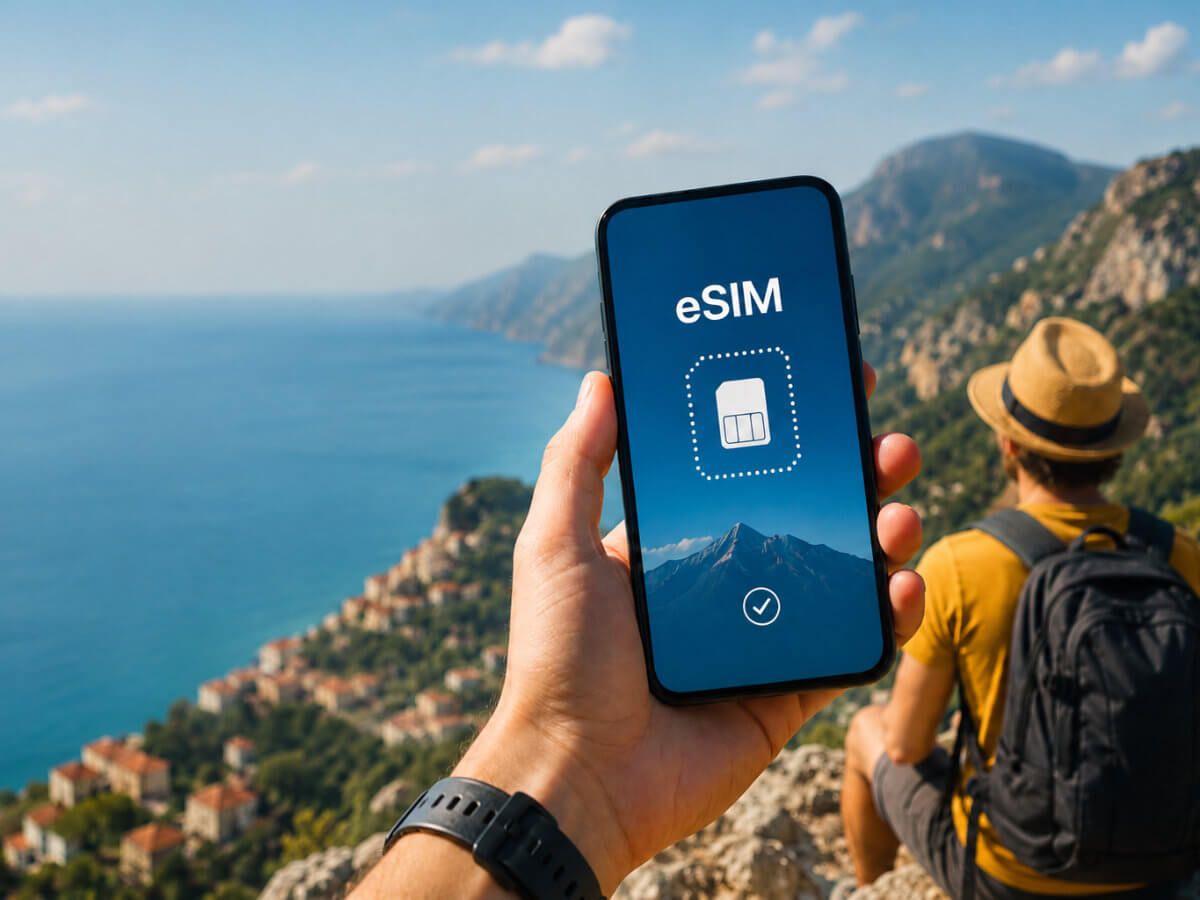
Setting up your mobile network abroad with a travel eSIM begins before departure by purchasing a data plan from a provider like Airalo or Holafly. Upon arrival, activate the eSIM profile via a QR code or app, then configure your device settings. Navigate to your mobile network settings, enable the travel eSIM line, and set it as the default for cellular data. Ensure your primary line is toggled off for calls and texts to avoid roaming fees, or use it only for iMessage or WhatsApp. For dual-SIM phones, assign the travel eSIM specifically for setting up mobile network abroad data while keeping your home SIM active for backup verification codes.
Checking Device Compatibility Before You Pack
Before finalizing your packing, verify your phone supports eSIM compatibility by checking its IMEI in settings or the manufacturer’s official list. Most modern flagships work, but older models or region-locked devices may fail. Ensure your handset is unlocked—carrier restrictions can block a travel eSIM activation entirely. Also confirm your operating system is updated, as outdated software often lacks eSIM profiles. Skipping this step risks arriving without data, leaving you scrambling for physical SIMs.
Check IMEI, unlock status, and OS version before you pack to guarantee your device works with a travel eSIM.
Quick Installation via QR Codes and Apps
For immediate connectivity, QR code eSIM activation eliminates the need for physical SIM cards. After purchasing a travel eSIM plan, you receive a unique QR code via email or the provider’s app. Scanning this code—using your phone’s camera—installs the eSIM profile within minutes. Most apps also offer direct installation, letting you tap a button instead of manually entering details. Always ensure your device is unlocked and connected to Wi-Fi during setup to prevent activation delays. Once scanned, the profile configures APN settings automatically, readying your connection for local networks abroad.
Scan a QR code or use a provider’s app to install a travel eSIM profile instantly, bypassing physical SIM swaps.
Troubleshooting Common Connection Hiccups
If your travel eSIM isn’t connecting, first ensure data roaming is enabled in your phone settings, as this is the most common hiccup. Next, manually select your local network provider instead of using “Automatic” to force a connection. For persistent issues, restart your device, then remove and reinstall the eSIM profile via the provider’s app. Check your plan’s validity and activation date. If still offline, follow this sequence:
- Toggle Airplane Mode on/off to refresh signal
- Reset network settings (typically under System Settings)
- Contact your eSIM provider’s chat support directly
These steps resolve nearly all temporary hindrances abroad.
Top Use Cases for Digital Roaming
The moment your flight lands, digital roaming through a travel eSIM keeps you live on navigation apps without hunting for airport Wi-Fi. You use instant connectivity to alert your family you’ve arrived safely, then follow the map directions to your rental car. Later, while exploring, you avoid physical SIM swaps by juggling your home number for banking texts and the eSIM’s data plan for ridesharing. At the café, you stream a local attraction video without buffering, thanks to the eSIM’s dedicated data roaming. When your local sim runs low, you simply top up the eSIM’s digital roaming allowance in-app, keeping your trip seamless. No more finding local vendors or messing with tiny SIM trays—just reliable connectivity for bookings, translation, and photos, all from your familiar device.
Navigating Foreign Cities Without Wi-Fi Reliance
Navigating a foreign city without constant Wi-Fi hunting is one of the most freeing shifts a traveler can make. With a travel eSIM, you can follow live offline-free maps while walking unfamiliar streets, letting GPS guide you to hidden courtyards or local eateries without a café login requirement. You can also spontaneously translate street signs or menus by snapping photos, all directly from your phone. Even sudden connectivity dips in metro tunnels or crowded markets feel manageable when your data is always-ready. This eliminates the draining chore of searching for unlock codes or café passwords, turning any spontaneous turn into a confident decision rather than an anxious guess.
Streaming Maps and Translation Tools On the Go
Streaming maps and translation tools on the go become seamless with a travel eSIM, eliminating the hunt for unreliable Wi-Fi. You can navigate foreign streets in real-time with Google Maps or Waze, while live translation apps like Google Translate instantly decipher menus and signs. This instant access turns a confusing metro system into a simple route, and a foreign menu into a familiar dish. How does a travel eSIM improve the accuracy of live map updates compared to local SIM cards? It ensures consistent, high-speed data from the moment you land, preventing buffering during critical turns or translation delays, so your tools work without interruption across borders.
Staying Connected in Remote Destinations
For travelers to remote destinations, staying connected hinges on consistent network access beyond urban centers. An eSIM typically latches onto the strongest local carrier in a given area, which is vital where single-provider coverage is unreliable. This automatic carrier switching reduces dead zones, but users should verify if their eSIM plan includes rural network partners before departing. Data speeds in these zones are often throttled, prioritizing basic messaging and navigation over streaming. A practical comparison clarifies choice:
| Aspect | Local Physical SIM | Travel eSIM |
| Carrier selection | Manual, often one provider | Auto-connects to strongest available |
| Coverage depth | Limited to prepaid zone | Spans multiple regional networks |
| Setup in remote area | Requires physical store visit | Instant activation via Wi-Fi |
This logic ensures the eSIM adapts to sparse infrastructure, preserving essential connectivity without user intervention.
Cost Comparison: Traditional SIMs vs. Modern Solutions
For international travel, traditional roaming SIMs often carry hidden daily fees and per-minute call charges that quickly inflate your bill. In contrast, modern eSIM solutions offer transparent, fixed-rate data packages, eliminating surprise costs. While a physical local SIM might appear cheaper upfront, eSIMs remove the expense of airport kiosk markups and the hassle of juggling multiple plastic cards. However, frequent travellers who need both data and extensive local calling may find a traditional local SIM more economical for that specific use case. Singapore eSIM For the vast majority focused on data connectivity, eSIMs deliver superior cost control and eliminate wasted balance on unused features.
Hidden Fees in Physical SIM Purchases
When buying a physical SIM abroad, hidden fees often inflate the cost beyond the sticker price. Activation charges, regional surcharges, and mandatory top-ups for “bonus” data you don’t need are common traps. Unlike a travel eSIM with transparent pricing, physical SIMs may also levy surprise fees for recharging with a foreign credit card. Hidden fees in physical SIM purchases can erase any initial savings, making the cheaper upfront price meaningless. Q: What is the most common hidden fee? A: Unexpected activation or “service setup” charges added at the counter.
Pay-As-You-Go Flexibility for Short Stays
For short stays, the pay-as-you-go flexibility for short stays inherent in modern travel eSIMs offers a clear cost advantage over traditional SIMs. Instead of committing to a rigid monthly contract or paying for multiple days you will not use, you select a data plan lasting exactly 5, 7, or 10 days. This eliminates the waste of paying for a full month of service. Furthermore, you avoid the hassle of physical SIM-card activation fees or top-up minimums. The payment structure is consumption-based, so you only buy data volume you expect to exhaust within that precise window, preventing prepayment for unused capacity and ensuring your short-trip budget is not inflated by long-term pricing.
Unlimited Plans and Their True Value
Unlimited plans from travel eSIM providers deliver genuine value by eliminating per-megabyte anxiety, unlike traditional SIMs that penalize overage. The true value lies in predictable costs for heavy data users—streaming maps or video abroad without counting bytes. To maximize unlimited travel eSIM value, first confirm the plan includes fair usage thresholds to avoid throttling. Next, check if hotspot tethering is allowed at full speed. Finally, compare daily versus monthly quotas to match your usage pattern. This prevents surprise slowdowns and ensures the plan covers your entire trip seamlessly.
Security and Privacy While Roaming
Using a travel eSIM inherently enhances your security and privacy while roaming by eliminating the risks of physical SIM swapping and tampering. Because the profile is downloaded digitally, you avoid handling a card that could be cloned or misused by untrusted third parties. Furthermore, your connection is encrypted end-to-end directly to the provider’s network, protecting data from interception on public Wi-Fi. Unlike local retail SIMs, which often require passport copies or personal registration, a travel eSIM keeps your identity separate from the foreign network. For maximum protection, always select a reputable eSIM provider that offers zero-logging policies, ensuring no one else can access your browsing history or location data as you move between countries.
Encrypted Data Tunnels for Safe Browsing
An encrypted data tunnel for safe browsing creates a secure, private conduit between a traveler’s device and the internet, wrapping all transmitted data in cryptographic layers that remain intact across any local cellular network. When using a travel eSIM, this tunnel prevents rogue hotspots, ISP monitoring, or man-in-the-middle attacks from intercepting passwords, financial details, or personal communications while roaming. The process follows a logical sequence:
- The travel eSIM establishes a baseline connection to the local carrier’s infrastructure.
- The device or a dedicated client initiates the tunnel protocol, negotiating encryption keys with a remote gateway.
- All HTTP/S requests, DNS lookups, and application traffic are encapsulated within this encrypted channel.
- The gateway decrypts the payload and forwards it to the destination server, ensuring the local carrier sees only ciphertext.
This architecture makes open Wi-Fi and unverified foreign networks effectively irrelevant to an attacker, as the tunnel renders the raw data unreadable from the moment it leaves the device.
Avoiding Public Wi-Fi Pitfalls with Your Own Connection
Public Wi-Fi networks in airports and cafes are riddled with security risks, including man-in-the-middle attacks. By using your travel eSIM, you bypass these dangerous hotspots entirely. Your connection remains encrypted directly to the cellular tower, ensuring no snooping hacker can intercept your passwords or credit card data. This makes your private cellular link a fortress against local network threats. Never toggle off your eSIM to join a free Wi-Fi; instead, rely on your own data plan for every online transaction and login.
A travel eSIM turns your phone into a secure, private gateway, eliminating the dangers of public Wi-Fi.
Managing Multiple Numbers for Work and Leisure
Managing multiple numbers for work and leisure with a travel eSIM prevents personal and professional blurring. You can assign one number to business calls and another for local leisure bookings, keeping your primary number dormant for emergency contacts. Separate eSIM profiles let you toggle between numbers without swapping physical SIMs. This isolates work intrusion during downtime and shields your private number from unfamiliar travel vendors.

- Activate a work-specific eSIM line for client calls while roaming.
- Use a separate leisure number for restaurant reservations or local SIM-only apps.
- Keep your home number active only for urgent, two-factor authentication alerts.
Dual-active eSIM devices allow both numbers to receive calls simultaneously without sacrificing data speeds.
Future Trends in Portable Connectivity
The future of portable connectivity with travel eSIMs points toward seamless, multi-network switching that happens in the background, letting you maintain portable connectivity across borders without manual profile juggling. Expect eSIMs to bundle with portable personal hotspots that dynamically allocate bandwidth, ensuring stable video calls even in crowded airports. A key trend is the rise of AI-driven data compression, which will reduce your app usage by up to 40% while abroad, making a single 1GB plan feel like 1.6GB. Travel eSIMs will also integrate with airplane Wi-Fi, creating a continuous mesh so your connection never drops from gate to gate.
eSIM Integration in New Smartphone Models
The shift toward native eSIM integration in new flagship and mid-range smartphones now eliminates the need to physically swap cards when traveling. Instead, you download a travel eSIM profile directly onto the device within minutes of landing, often before even leaving the departure gate. Settings menus now allow you to manage multiple data plans simultaneously, keeping your home number active for calls while using a local travel eSIM strictly for high-speed data. This dual-SIM architecture effectively turns each handset into a portable connectivity hub, adaptable to any destination without hardware changes. As more models adopt this standard, the traveler’s reliance on plastic SIMs or temporary hotspots becomes entirely obsolete.
AI-Optimized Network Switching
AI-Optimized Network Switching transforms travel eSIMs by dynamically analyzing real-time conditions like signal strength, latency, and cost. Instead of manual carrier selection, the system predicts the best local network for your activity—prioritizing low latency for video calls or maximum bandwidth for streaming. This happens seamlessly in the background, eliminating dropped connections during border crossings. The result is intelligent roaming without interruptions, as the AI pre-emptively switches to stronger towers before you notice degradation. You simply move; the eSIM’s neural logic ensures consistent, high-performance connectivity wherever your journey takes you.
Sustainable Travel Tech: Reducing Plastic SIM Waste
Traditional plastic SIM cards create substantial waste, with each traveler discarding them after a trip. Sustainable travel tech via eSIM eliminates this physical lifecycle entirely, as the digital profile is embedded in the device. This shift reduces the manufacturing demand for petroleum-based plastics and the carbon footprint of shipping physical cards globally. A single traveler switching to eSIM for ten trips saves roughly 50 grams of plastic and packaging waste. Q: Does deleting my eSIM profile still produce e-waste? A: No, because no physical material is involved—removing a profile is a software action, leaving zero residual hardware or plastic components for landfill.
What Exactly Is a Travel eSIM and How Does It Differ From a Physical SIM?
Why Your Phone No Longer Needs a Plastic Chip for International Roaming
The Core Mechanism: How a Digital Profile Connects You Abroad
Key Benefits of Using a Travel eSIM Over Traditional Roaming or Local SIMs
Instant Activation the Moment You Land—No Store Visits Required
Keeping Your Primary Number Active While Using a Separate Data Plan
How to Choose the Right Travel eSIM Plan for Your Trip
Matching Data Allowances to Your Usage Habits: Light Browsing vs. Heavy Streaming

Comments are closed